Audio and Video Engineering in Broadcast Media: A Reference Overview
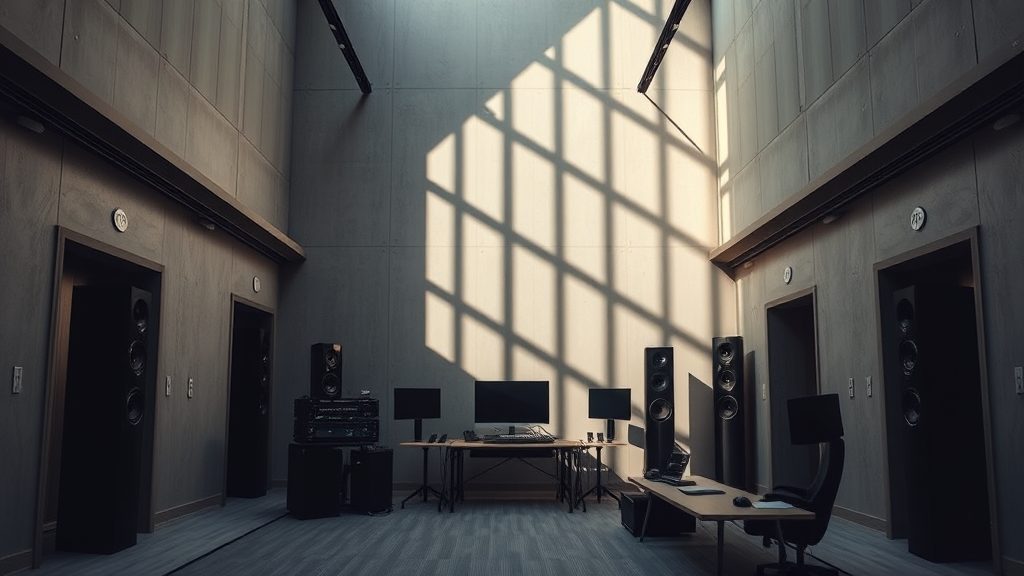
Foundations of Sound and Signal Processing
Audio engineering within broadcasting encompasses the technical skills and creative practices aimed at capturing, manipulating, mixing, and mastering sound. The field rests on an understanding of acoustics: sound travels through air as waves carrying energy, defined by frequency measured in hertz, amplitude governing volume, and wavelength. A broadcast engineer's decision to position a microphone depends on these properties, since a room with excessive reverberation can render dialogue unintelligible, while an anechoic environment may sound unnatural for voiceovers or music recordings.
Microphone selection is a critical decision point in any production chain. Dynamic microphones offer durability and handle high volumes without distortion, while condenser microphones capture a wider frequency range but require phantom power. Cardioid pickup patterns help isolate vocals or instruments from ambient noise, a consideration that directly affects the clarity of the final broadcast signal.
Mixing, Mastering, and Digital Workflows
Once recorded, audio files pass through mixing and mastering stages. Mixing involves balancing tracks using equalization to adjust frequencies, compression to control dynamics and reduce volume spikes, and panning to determine stereo imaging across left and right channels. Mastering then prepares the final mix for distribution, adjusting overall volume, applying subtle EQ tweaks, adding stereo width enhancement, and ensuring compatibility with different audio formats.
Digital audio workstations (DAWs) have become the central tool for these workflows. They support multiple input channels for simultaneous recording, provide precise synchronization for aligning tracks, and integrate with third-party plugins for effects such as chorus or flanger. An analysis of the production pipeline reveals that data management, editing and processing, and mixing and mastering form the three core components of a robust digital audio workflow, each contributing to the final output quality.
Regulatory Context and Industry Standards
The Federal Communications Commission, established by the Communications Act of 1934, regulates interstate and international communications by radio, television, wire, satellite, and cable across all fifty states and the District of Columbia. According to the FCC's mission statement as documented on fcc.gov, its primary goal is to ensure accessibility and promote communications across various mediums. In 1965, the Commission first established rules for cable systems that received signals via microwave antennas, and in 1966 it extended those regulations to all cable systems regardless of signal reception method.
Types of FCC regulations governing the broadcast industry include rules dictating how stations operate, ensuring fairness in coverage, protecting against harmful interference, and promoting technological innovation. In 1972, Congress passed the Federal Advisory Committee Act to ensure that advice by advisory committees is objective and accessible to the public, a decision that shaped how regulatory guidance is developed within the broadcast sector.
Analog vs. Digital: A Comparative Analysis
A comparative analysis of analog vs. digital broadcasting highlights a fundamental structural difference: analog systems transmit signals as continuous waves, while digital systems use binary code to represent information. As of 2026, the industry has experienced a significant increase in the adoption of digital broadcasting due to its superior clarity and reliability compared to traditional analog methods.
This transition affects every stage of audio and video engineering, from the choice of file format—WAV for uncompressed recording, AAC for compressed high-fidelity distribution, or MPEG Layer III (MP3) for highly compressed transmission—to the software environments in which engineers operate. The decision to migrate to digital pipelines is driven by the need for greater precision in editing, broader format compatibility, and improved collaboration through cloud-based platforms.
Checklist
- Confirm microphone type (dynamic vs. condenser) and pickup pattern match the recording environment and source material before capturing audio.
- Verify that EQ, compression, and panning settings in the mixing stage produce a balanced multi-track signal before proceeding to mastering.
- Ensure the selected audio file format (WAV, AAC, or MP3) aligns with the target distribution platform and fidelity requirements.
- Review compliance with FCC regulations as published on fcc.gov, including interference-protection rules and station-operation standards established from 1965 onward.
- Validate synchronization and data-management workflows within the DAW to maintain track alignment across all input channels.
Referenced Timeline: 1934 Through 2026
The material lists five years — 1934, 1965, 1966, 1972, and 2026 — and identifies fcc.gov as the associated organization. No case names appear in the source material; the entries are limited to these dates and the single organizational reference.
Viewed as a sequence, the years cluster in the mid-1960s and early 1970s (1965, 1966, 1972) against the wider arc opening in 1934 and closing in 2026, a trend that suggests sustained activity tied to fcc.gov across more than nine decades — a span that extends well beyond any single state-level regulatory cycle.
- 1934
- 1965
- 1966
- 1972
- 2026
- fcc.gov
Sources and Grounding Material
- mission: Broadcasting and media production: the technology and craft behind broadcast media.
- editorial_style: reference
- primary_topics: broadcast technology; media production craft; audio and video engineering; industry standards
- excluded_topics: law or legal services; politics; medical advice beyond general wellness; any Axis client or legal domain references
- Audio Engineering Fundamentals — Sympathy Broadcasting Audio Engineering Fundamentals Published 2026-08-17 Understanding Audio Engineering Basics The field of audio engineering encompasses a broad range of technical skills and creative practices aimed at capturing, manipulating, mixing, and mastering sound. In the context of broadcasting and radio commentary, these processes are crucial for delivering high-quality audio experiences to listeners. This article delves into the fundamental concepts every aspiring audio engineer should know. Sound Waves and Acoustics To effectively work with sound in a broadcast setting, an understanding of acoustics is essential. Sound travels through air as waves that carry energy from one place to another. These waves have properties like frequency (measured in hertz), amplitude (volume level), and wavelength. Frequency: Refers to the number of wave cycles per second, influencing pitch perception. Amplitude: Defines how loud a sound is; higher amplitudes result in louder sounds. In acoustics, reverberation and echo are key elements that affect sound quality. A room with too much reverberation can make dialogue hard to understand, while anechoic environments (with no echoes) can be unnatural-sounding for voiceovers or music recordings. Recording Techniques The choice of microphone and recording technique greatly influences the final sound quality. Common microphones used in broadcasting include: Dynamic Microphones: Durable and good at handling high volumes without distortion. Condenser Microphones: More sensitive, capable of capturing a wide range of frequencies but require phantom power. The positioning of microphones relative to the sound source is also critical. Techniques such as cardioid pickup patterns help isolate vocals or instruments from ambient noise in a recording environment. Mixing and Mastering Once recorded, audio files need mixing and mastering before being broadcasted. Mixing involves balancing different tracks to ensure that all elements of the mix sit well together and are clear. EQ (Equalization): Used to adjust frequencies within a track so it sits better in the overall mix. Compression: Controls dynamics by reducing volume spikes, making quieter sounds more audible without sacrificing loudness. Panning and Stereo Imaging: Decides how much of each channel goes to left or right speakers. The mastering stage focuses on preparing the final mix for distribution across various platforms while maintaining its integrity. This process includes adjusting overall volume, applying subtle EQ tweaks, adding stereo width enhancement, and ensuring compatibility with different audio formats. Audio Formats and File Types \n Selecting an appropriate format for storing or transmitting audio files is crucial in broadcasting. Common choices include: WAV (.wav): High-quality uncompressed file type, ideal for recording and editing. AAC (.aac): Compressed but still high-fidelity format often used by Apple products. MPEG Layer III or MP3 (.mp3): Highly compressed format offering good quality at lower bitrates. The choice of file type should balance between audio fidelity
- Digital Audio Workflows for Producers — Sympathy Broadcasting Digital Audio Workflows for Producers Published 2026-08-17 Digital Audio Workflows: Enhancing Production Quality In today's fast-paced media environment, mastering digital audio workstations (DAWs) is essential for broadcasters and radio producers. These tools offer unprecedented flexibility, allowing you to create professional-quality audio content efficiently. This article explores the key components of digital audio workflows and how they can elevate your production processes. Understanding DAWs A Digital Audio Workstation (DAW) is a software application used for recording, editing, producing, and mixing music or other audio content. For radio producers, DAWs provide an integrated environment to manage various aspects of audio production—from capturing live recordings to post-production editing. Recording: DAWs support multiple input channels for simultaneous recording, enabling you to capture interviews, performances, and soundscapes seamlessly. Mixing: They offer a range of mixing tools such as EQ (equalization), compression, reverb, and panning to refine your audio tracks. Synchronization: DAWs provide precise synchronization options for aligning multiple audio tracks accurately. Importance of Digital Audio Workflows Digital audio workflows streamline the production process, ensuring that every element of your project is handled efficiently. By adopting these workflows, producers can focus more on creativity and less on technical details. Efficiency: Automation features in DAWs reduce manual tasks, allowing for quicker turnaround times without compromising quality. Creativity: Advanced editing capabilities enable producers to experiment with sound design and audio effects more freely. Collaboration: Cloud-based platforms facilitate real-time collaboration among team members, regardless of their physical location. Components of a Digital Audio Workflow A robust digital audio workflow consists of several interconnected stages, each contributing to the final output quality. Here are some critical components: Data Management: Effective organization of assets is crucial for efficient production. DAWs often include built-in asset management systems or work in conjunction with external storage solutions. Editing and Processing: Advanced editing tools allow for precise manipulation of audio files, including cutting, pasting, trimming, and applying effects. Mixing and Mastering: Proper mixing balances the levels and dynamics between tracks, while mastering optimizes the final output for various playback systems. In addition to these core components, many DAWs also integrate with third-party plugins, expanding their functionality further. These plugins can include specialized effects like chorus or flanger, which add unique flavors to your productions. Choosing the Right DAW for Your Needs Selecting the right DAW is a crucial decision that impacts productivity and creativity. Consider factors such as ease of use, cost, compatibility with existing hardware, and feature sets when choosing a tool. Ableton Live: Ideal for live performance and electronic music production but also suitable for radio broadcasting due to its flexible arrangement capabilities. Pro Tools: Widely used in professional studios, Pro Tools offers comprehensive mixing
- Sympathy Broadcasting — Broadcasting, Podcasting, and Audio Engineering The Role of the FCC in Broadcast Technology When discussing broadcast technology in 2026, it's essential to understand the role of the Federal Communications Commission (FCC). Established by the Communications Act of 1934, the FCC plays a pivotal role in regulating and overseeing all aspects of broadcasting within the United States. According to the FCC’s mission statement, its primary goal is to ensure accessibility and promote communications across various mediums including radio, television, wire, satellite, and cable. Historical Context and Regulatory Framework The history of broadcast regulation by the FCC dates back several decades. The establishment of rules for cable systems was a significant step in this regulatory journey. In 1965, the Commission first established rules for cable systems that received signals via microwave antennas. This was followed by the creation of comprehensive regulations for all cable systems the next year, highlighting a trend towards more thorough regulation of broadcast technology. Media Literacy and Critical Analysis In the context of broadcasting and media production, media literacy is crucial. Media literacy involves accessing, analyzing, evaluating, and communicating information in various forms, with a focus on critical thinking about audio content in particular. Understanding these aspects enables better analysis of broadcast technology trends and standards. Types of Broadcast Regulations FCC regulations cover diverse areas within the broadcasting industry. Types of rules include those governing how stations operate, ensuring fairness in coverage, protecting against harmful interference, and promoting technological innovation. These regulations are essential for maintaining an accessible and equitable broadcast environment. Cable Television Regulation: A Case Study The regulation of cable television is a prime example of the FCC's regulatory efforts. In 1965, the Commission established rules specifically for cable systems receiving signals through microwave antennas. The following year, these regulations were extended to all cable systems regardless of their signal reception methods. This trend towards broader and more comprehensive regulation highlights the evolving nature of broadcast technology. Comparative Analysis: Analog vs. Digital Broadcasting A critical aspect of broadcasting analysis involves comparing analog and digital broadcasting technologies. Analog systems transmit signals as continuous waves, while digital systems use binary code to represent information. This comparison is vital for understanding technological advancements and their impact on broadcast quality. Trends in Broadcast Technology One clear trend in broadcast technology is the shift towards digital over analog formats. As of 2026, there has been a significant increase in the adoption of digital broadcasting due to its superior clarity and reliability compared to traditional analog methods. This transition reflects broader industry trends towards more advanced technological solutions. Decision-Making Criteria for Broadcast Engineers When making decisions about broadcast technology implementation or upgrades, several factors must be considered. These include Sources The FCC's Mission — fcc.gov (archived) — …FCC's Mission The Federal Communications Commission (FCC) regulates interstate and international communications by radio, television, wire, satellite, and cable in all 50 states, the District FCC History — fcc.gov (archived) — Advisory Committees In 1972, Congress passed the Federal Advisory Committee Act to ensure that advice by advisory committees is objective and accessible to the public Cable Television Regulation — fcc.gov (archived) — …systems which received signals by microwave antennas . In 1966, the Commission established rules for all cable systems (whether or not served by microwave). The Supreme Court Frequently Asked Questions What is Sympathy Broadcasting — Broadcasting, Podcasting, and Audio Engineering?